
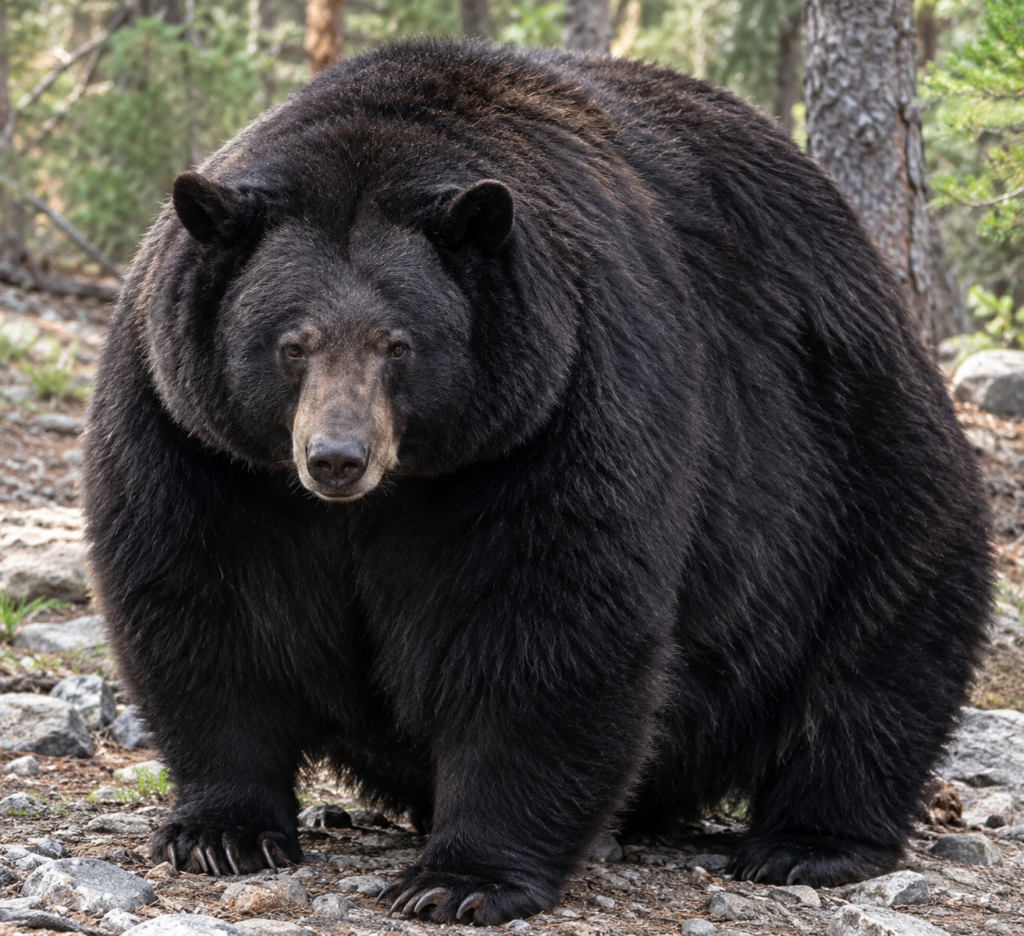

Hank the Tank became one of the most talked-about black bears in America after repeatedly breaking into homes around South Lake Tahoe, California. What started as a wildlife-management problem quickly became a national story because of the bear’s enormous size, unusual persistence, and ability to get past barriers that would normally keep wild animals outside. Residents shared stories of damaged doors, broken windows, and homes entered in search of food, while wildlife officials struggled to find a safe solution.
The story became even more surprising when DNA testing revealed that Hank the Tank was not actually a male bear, as many people originally believed. The animal was identified as a female black bear known officially as 64F and later named Henrietta. Investigators also discovered that not every bear-related incident in the area had been caused by Hank.
Her story eventually had a different ending from what many people expected. Instead of being euthanized, Henrietta was captured and transferred to a wildlife sanctuary in Colorado. Her cubs were separately rehabilitated and eventually released into the wild.
Who Was Hank the Tank?
Hank the Tank was the nickname given to a very large female black bear involved in repeated home break-ins in the South Lake Tahoe area.
The nickname came from the bear’s impressive size. News reports commonly estimated that she weighed around 500 pounds, making her considerably larger than many people expect a black bear to be.
But her size was only part of the story.
Hank became famous because she repeatedly entered residential properties while searching for food. Instead of simply passing through neighborhoods, she had learned that houses could contain easily accessible meals.
That behavior made her particularly difficult for wildlife officials to manage.
The bear eventually became so recognizable that “Hank the Tank” turned into a viral nickname. However, the name created one of the story’s biggest misconceptions: Hank was widely described as male before investigators established that the bear was actually female.
After her capture, she was identified as Henrietta.
Why Did Hank the Tank Keep Breaking Into Homes?
The central reason was food.
Black bears have an excellent sense of smell and are naturally opportunistic feeders. In areas where humans live near bear habitat, unsecured garbage, pet food, birdseed, food waste, and other attractants can provide easy calories.
Once a bear discovers a reliable food source, it may return.
This is particularly important because bears can learn from experience. If entering a building produces a reward, the animal can become increasingly persistent.
Hank appeared to have developed exactly this type of behavior.
Instead of viewing a neighborhood simply as a place to pass through, she had learned that homes could contain food. Her size and strength then allowed her to force her way through doors, windows, and other barriers.
This created a difficult cycle:
- Hank found food near homes.
- She returned to the same area.
- She discovered additional food sources.
- Residents attempted to prevent access.
- The bear continued searching for another opportunity.
This explains why simply chasing a bear away does not necessarily solve the underlying problem.
How Big Was Hank the Tank?
Hank’s size became one of the defining features of her story.
Reports during the height of the controversy estimated her weight at approximately 500 pounds. The exact weight should be treated as a reported estimate rather than a permanent measurement, but there was little doubt that she was unusually large.
Her physical size mattered because a large adult black bear can exert considerable force.
A door that might stop a smaller animal could potentially be damaged by a very large bear determined to reach food.
This also contributed to the public fascination with Hank. People were accustomed to hearing about bears entering garbage cans or wandering through yards. A bear powerful enough to repeatedly break into houses was much more unusual.
However, her behavior was not simply about strength.
Her ability to repeatedly find food was arguably just as important.
How Many Homes Did Hank the Tank Enter?
The number of incidents associated with Hank changed as investigators collected additional evidence.
During the early stages of the story, reports described a large number of calls and property incidents connected to the bear. Some accounts referred to dozens of properties and numerous reports from residents.
Later DNA testing provided a more precise picture.
Wildlife officials eventually linked bear 64F to at least 21 home break-ins and incidents of property damage.
This distinction is important because investigators discovered that other bears were also involved in bear-related incidents around the Lake Tahoe area.
In other words, not every damaged property or bear sighting could automatically be blamed on Hank.
This is one of the most interesting aspects of the case because the original viral story became more complicated as scientific evidence became available.
The DNA Discovery Changed the Story
DNA testing played an important role in identifying which bear was responsible for particular incidents.
When several bears live in the same geographical area, simply seeing a bear nearby does not prove that it caused a specific property-damage incident. Wildlife officials need evidence that connects an individual animal to a particular event.
DNA can provide that connection.
In Hank’s case, genetic evidence helped officials distinguish her confirmed activity from incidents involving other bears.
It also helped establish her identity.
The animal widely known as Hank the Tank was ultimately identified as a female black bear, not the male bear that many early reports had assumed.
That discovery changed the way the public understood the story.
The famous “Hank” was actually Henrietta.
Was Hank the Tank Dangerous?
Hank’s behavior created legitimate safety concerns, but it is important to distinguish between a bear seeking food and an animal deliberately hunting or attacking humans.
The primary problem associated with Hank was property entry and food-seeking behavior.
A food-conditioned bear can nevertheless become dangerous because repeated encounters reduce the distance between wildlife and people.
A bear that becomes comfortable entering a house is more likely to encounter people at close range.
That creates risks for everyone involved.
The bear can be injured or killed, while residents can be placed in a frightening and potentially dangerous situation.
This is why wildlife agencies generally emphasize preventing bears from receiving food rewards around homes.
The longer a bear successfully obtains food from people, the more difficult the conflict can become.
What Does “Food-Habituated” Mean?
Food habituation is essential to understanding Hank’s behavior.
A wild bear does not naturally understand that a garbage container, kitchen, or refrigerator contains human food. It learns through experience.
If the animal repeatedly discovers food around people, it can begin associating residential areas with easy meals.
That does not necessarily mean the bear wants to attack people.
Instead, the bear has learned that human environments provide resources.
Hank became an extreme example because her behavior progressed beyond normal neighborhood visits. She repeatedly attempted to enter homes.
One important lesson from her story is that preventing the first successful food reward can be easier than correcting established behavior later.
Once an animal learns that breaking through a barrier leads to food, stronger barriers may only become part of an ongoing contest between the animal’s persistence and the homeowner’s defenses.
What Happened to Hank the Tank?
Hank’s story reached a major turning point in 2023.
After years of concern surrounding her behavior, wildlife officials successfully captured the bear.
Rather than being euthanized, she was transferred to the Wild Animal Sanctuary in Colorado.
This provided an alternative to keeping her in the environment where she had developed her food-seeking behavior.
The sanctuary could provide food and care without allowing her to continue entering human homes.
After arriving at the sanctuary, the bear was referred to as Henrietta.
Her relocation effectively ended the repeated residential encounters that had made Hank one of the most famous bears in the country.
Why Was Hank Not Euthanized?
Euthanasia had been discussed during the earlier stages of the controversy because of the bear’s repeated home invasions and food-conditioned behavior.
The situation was complicated by the difficulty of safely relocating a bear that had developed such strong associations with human food.
Eventually, however, a sanctuary placement became available.
That gave wildlife officials another option.
Henrietta could live under managed care instead of continuing to interact with residents in South Lake Tahoe.
Her case illustrates a broader challenge in wildlife management: relocating an animal is not always simple. A bear that has learned to seek food from humans may continue the same behavior after being moved if suitable safeguards are not in place.
What Happened to Hank’s Cubs?
Hank’s story also involved her cubs.
The young bears were taken to a rehabilitation facility in California, where specialists worked to prepare them for life in the wild.
This distinction was important.
The cubs had not developed the same long history of entering homes as their mother. Rehabilitation could therefore focus on teaching them behaviors that would allow them to survive without relying on humans.
The cubs were eventually released into the eastern Sierra Nevada.
Their rehabilitation included methods designed to discourage human-oriented behavior and encourage natural responses.
Their release represented a very different outcome from their mother’s situation.
While Henrietta remained under human care, the cubs were given an opportunity to return to their natural environment.
What Can Homeowners Learn From Hank’s Story?
Hank the Tank’s story provides several practical lessons for people living in bear country.
Secure Garbage
Garbage is one of the most common attractants for wildlife.
Residents should follow local regulations for bear-resistant trash containers and avoid leaving food waste outside when possible.
Remove Outdoor Food Sources
Other potential attractants include:
- Pet food
- Bird feeders
- Outdoor refrigerators
- Barbecue grease
- Fruit
- Animal feed
- Unsecured food containers
A bear only needs to discover one reliable food source to begin returning.
Do Not Assume a Strong Door Solves the Problem
A stronger door can help protect a property, but it does not address the reason a bear wants to enter.
This is one of the less obvious lessons from Hank’s case.
Wildlife conflict is often a food-management problem before it becomes a physical-security problem.
If the food reward disappears, the motivation for repeatedly visiting the property may also decrease.
Follow Local Wildlife Guidance
Residents should contact the appropriate wildlife authorities when a bear repeatedly enters residential areas.
People should avoid approaching or attempting to physically confront a bear.
The goal should be to create distance between humans and wildlife while allowing trained professionals to manage persistent conflicts.
Common Misconceptions About Hank the Tank
Several facts about Hank are frequently mixed together online.
Hank Was Female
The bear was initially believed to be male, but later identification established that she was female.
Her later name was Henrietta.
Hank Was Not Responsible for Every Bear Incident
DNA evidence showed that other bears were responsible for some incidents in the region.
She Was Not Simply an “Aggressive Bear”
Her documented behavior centered heavily around finding food and entering properties.
That does not eliminate the safety concerns, but it provides important context.
She Was Not Euthanized
Despite earlier discussion of euthanasia, Henrietta was ultimately captured and moved to a Colorado sanctuary.
Her Cubs Returned to the Wild
The cubs were rehabilitated and later released into the eastern Sierra Nevada.
Frequently Asked Questions
Is Hank the Tank still alive?
Available reports following her 2023 capture stated that Hank, later identified as Henrietta, was transferred to a wildlife sanctuary in Colorado. She was not euthanized and entered managed care after her capture.
Was Hank the Tank male or female?
Hank the Tank was female. Wildlife identification established that the bear known as Hank was bear 64F, and she was later given the name Henrietta.
Why did Hank the Tank break into houses?
Hank repeatedly entered homes while searching for food. Wildlife officials described her as highly food-habituated, meaning she had learned that human environments could provide easily accessible food.
How much did Hank the Tank weigh?
News reports commonly estimated Hank’s weight at approximately 500 pounds. Her unusually large size became one of the main reasons she attracted widespread attention.
Did Hank the Tank have cubs?
Yes. Her cubs were placed into rehabilitation and were later released into the wild after being prepared for independent life.
Was Hank the Tank euthanized?
No. She was captured in 2023 and transferred to a wildlife sanctuary in Colorado, where she could live under managed care.
Conclusion
Hank the Tank’s story became famous because of an extraordinary combination of size, persistence, and repeated encounters with human homes. But the real story is more complicated than the viral nickname suggests.
The bear initially believed to be a huge male was eventually identified as a female black bear named Henrietta. DNA evidence also showed that not every bear-related incident in South Lake Tahoe was caused by her.
Her repeated attempts to enter homes were closely connected to food habituation, demonstrating how quickly wildlife conflicts can develop when animals discover reliable human food sources.
Her eventual capture and relocation to a Colorado sanctuary provided a different ending from the one many people expected, while her cubs were rehabilitated and returned to the wild.
The most useful lesson from Hank the Tank may therefore be less about one famous bear and more about preventing wildlife conflicts before they become severe. Keeping food, garbage, and other attractants secured can make a significant difference in helping bears remain wild—and helping people and wildlife safely share the same landscape.