
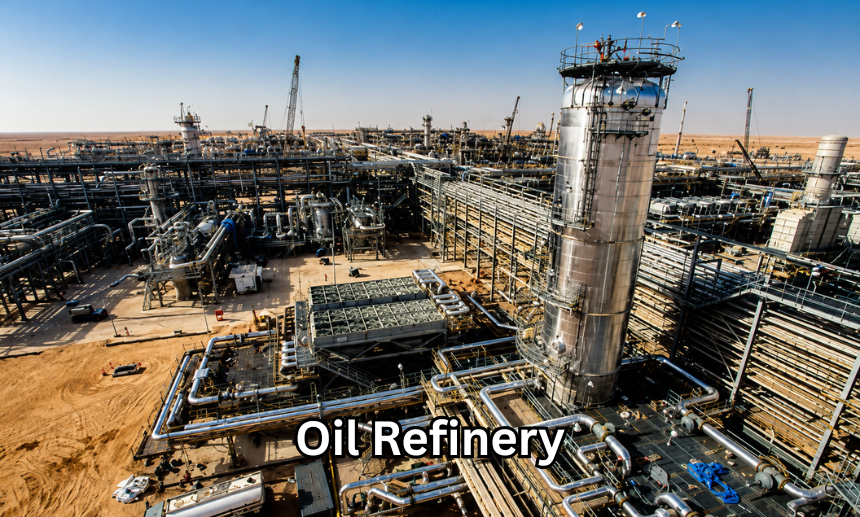

Every day, people rely on fuels and products that begin their journey as crude oil. From the gasoline used to commute to work to the jet fuel powering international flights and even the plastics found in household items, these products would not exist without an oil refinery. While many people know that refineries produce fuel, far fewer understand the complex processes that transform thick, unrefined crude oil into dozens of valuable products used worldwide.
An oil refinery is far more than a large industrial facility. It is a highly engineered operation where chemistry, engineering, environmental management, and advanced technology work together around the clock. Modern refineries are designed to maximize efficiency, improve safety, reduce emissions, and adapt to changing energy demands.
This guide explains how an oil refinery works, the different refining processes, products created from crude oil, career opportunities, common safety measures, and the industry’s biggest challenges. Whether you’re curious about refining technology, considering oil refinery jobs, or simply want to understand how fuel reaches your local gas station, this article provides a practical, easy-to-understand overview.
What Is an Oil Refinery?
An oil refinery is an industrial facility that converts crude oil into usable petroleum products through a series of physical and chemical processes.
Crude oil cannot be used directly because it contains a mixture of hydrocarbons with different boiling points and chemical properties. Refineries separate these components and further process them into products that meet strict quality standards.
Common products include:
- Gasoline
- Diesel fuel
- Aviation fuel
- Liquefied petroleum gas (LPG)
- Heating oil
- Asphalt
- Lubricants
- Petrochemical feedstocks
- Sulfur
- Petroleum coke
Modern refineries operate continuously, often 24 hours a day, throughout the year except during scheduled maintenance shutdowns.
How Does an Oil Refinery Work?
Although every refinery has unique equipment, the overall refining process follows several major steps.
1. Crude Oil Delivery
Crude oil arrives by:
- Pipelines
- Oil tankers
- Rail transport
- Trucks
- Barges
Before processing begins, samples are tested for quality, sulfur content, density, and contaminants.
2. Desalting
Crude oil naturally contains water, salts, and sediment.
A desalting unit removes these impurities to prevent equipment corrosion and improve refining efficiency.
3. Atmospheric Distillation
This is the first major refining step.
The crude oil is heated to very high temperatures before entering a distillation column.
Different hydrocarbons separate according to their boiling points.
Products removed include:
- Refinery gases
- Naphtha
- Kerosene
- Diesel
- Heavy gas oil
- Residual fuel oil
This process doesn’t change the chemical structure—it simply separates components.
4. Conversion Processes
Heavy fractions are converted into lighter, higher-value fuels using specialized equipment.
Important conversion methods include:
- Fluid catalytic cracking
- Hydrocracking
- Coking
- Visbreaking
These processes significantly increase gasoline and diesel production.
5. Treatment and Cleaning
Fuel products undergo treatment to remove:
- Sulfur
- Nitrogen compounds
- Metals
- Other impurities
Hydrotreating has become especially important because governments worldwide require cleaner-burning fuels.
6. Blending
The final products are carefully blended to achieve required specifications.
This blending oil refinery stage ensures fuels meet performance, emissions, and safety standards before shipment.
Main Products Produced by an Oil Refinery
A single barrel of crude oil can produce numerous products, depending on refinery configuration and crude quality.
Major outputs include:
Transportation Fuels
These represent the largest share of refinery production.
Examples include:
- Gasoline
- Diesel
- Jet fuel
- Marine fuel
Petrochemical Feedstocks
These materials become raw ingredients for manufacturing:
- Plastics
- Synthetic rubber
- Paint
- Detergents
- Packaging
- Medical equipment
Industrial Products
Other refinery products include:
- Asphalt
- Lubricating oils
- Wax
- Petroleum coke
- Sulfur
Many everyday consumer goods indirectly begin at an oil refinery.
Types of Oil Refineries
Not all refineries are designed the same way.
Simple Refineries
These perform basic separation through atmospheric distillation.
They mainly produce lower-value fuels.
Complex Refineries
Complex facilities include advanced conversion units capable of producing larger quantities of premium transportation fuels.
These are more flexible and generally more profitable.
Petrochemical-Integrated Refineries
Some modern facilities combine petroleum refining with petrochemical manufacturing.
This integration improves efficiency while creating additional revenue streams.
Why Oil Refineries Are So Important
Without oil refineries, crude oil would have limited practical use.
Refineries support:
- Transportation
- Manufacturing
- Agriculture
- Aviation
- Shipping
- Emergency services
- National defense
Nearly every modern economy depends on a reliable supply of refined petroleum products.
Oil Refinery Jobs
Many people search for oil refinery jobs because the industry offers stable employment with competitive salaries.
Common career paths include:
Engineering
Engineers may specialize in:
- Chemical engineering
- Mechanical engineering
- Electrical engineering
- Civil engineering
- Process engineering
Operations
Plant operators monitor equipment and control refining processes from advanced control rooms.
Maintenance
Maintenance teams repair and inspect:
- Pumps
- Compressors
- Heat exchangers
- Valves
- Pipelines
Laboratory Positions
Laboratory technicians perform quality testing throughout the refining process.
Environmental and Safety
Specialists monitor emissions, workplace hazards, and regulatory compliance.
Entry-Level Opportunities
Many facilities hire:
- Entry-level operators
- Safety attendants
- Mechanical apprentices
- Instrument technicians
- General maintenance workers
Some entry level oil refinery safety attendant jobs require safety certifications but not necessarily a university degree.
Safety Inside an Oil Refinery
Safety is the highest priority in refinery operations.
Facilities manage risks associated with:
- High temperatures
- High pressures
- Flammable materials
- Heavy machinery
- Hazardous chemicals
Modern safety systems include:
- Gas detection
- Fire suppression
- Emergency shutdown systems
- Pressure relief equipment
- Continuous monitoring
Employees also receive ongoing emergency response training.
Environmental Challenges
Today’s oil refineries operate under strict environmental regulations.
Major focus areas include:
- Air quality
- Wastewater treatment
- Carbon emissions
- Energy efficiency
- Waste reduction
Many facilities continue investing in cleaner technologies and improved emission controls.
Common Causes of Oil Refinery Accidents
Although refineries are designed with multiple safety systems, accidents can still occur.
An oil refinery explosion or fire is typically the result of several contributing factors rather than a single mistake.
Possible causes include:
- Equipment failure
- Corrosion
- Gas leaks
- Human error
- Maintenance issues
- Electrical faults
Investigations following incidents help improve future safety standards across the industry.
Oil Refinery Explosions in the News
News stories about refinery incidents often attract significant attention.
Examples that have received widespread media coverage include searches related to:
- Valero Texas oil refinery explosion
- Port Arthur Texas oil refinery explosion
- Texas oil refinery explosion cause
Each incident has unique circumstances, and official investigations determine the contributing factors before conclusions are reached.
Rather than indicating widespread industry problems, these investigations often lead to improved engineering standards and updated operating procedures.
Oil Refineries Around the World
Oil refineries are found on every continent, often located near major ports, pipelines, or oil-producing regions. Their size, complexity, and production capacity vary depending on local demand and available crude oil.
Russian Oil Refinery Operations
Searches for Russian oil refinery and Russia oil refinery have increased in recent years because these facilities have frequently appeared in international news.
Russia operates numerous refineries that produce gasoline, diesel, aviation fuel, and petrochemical products for both domestic use and export. Due to geopolitical events, some facilities have experienced operational disruptions, maintenance issues, or attacks, affecting regional fuel markets and global energy prices.
Tuapse Oil Refinery
The Tuapse oil refinery is one of Russia’s well-known refining facilities. It has periodically been featured in news reports due to its strategic location and importance within the country’s refining network.
Haifa Oil Refinery
The Haifa oil refinery is one of Israel’s major refining complexes. It supplies fuels and industrial products while serving domestic transportation and manufacturing sectors. Like many large refineries, it continuously upgrades equipment to improve efficiency and environmental performance.
El Segundo Oil Refinery
Located in California, the oil refinery El Segundo is among the largest refineries on the U.S. West Coast. It plays a significant role in supplying gasoline, diesel, aviation fuel, and other petroleum products to California’s transportation network.
PDVSA Oil Refinery Venezuela
The PDVSA oil refinery Venezuela system consists of several large refineries operated by the country’s state-owned oil company. These facilities have historically been central to Venezuela’s economy, although production has fluctuated over the years due to maintenance challenges, infrastructure issues, and changing market conditions.
Temporary Oil Refinery Shutdowns
Oil refineries occasionally undergo planned shutdowns, often called “turnarounds.”
These scheduled maintenance periods allow operators to:
- Inspect critical equipment
- Replace worn components
- Upgrade technology
- Improve efficiency
- Meet regulatory requirements
During these shutdowns, contractors may be hired for temporary oil refinery shutdown jobs, including welders, electricians, pipefitters, scaffold builders, insulation workers, and safety personnel. These positions can offer competitive short-term earnings and valuable industry experience.
The Future of Oil Refineries
The refining industry is evolving rapidly as energy demand, environmental regulations, and technology continue to change.
Modern refineries are investing in:
- Digital monitoring systems
- Artificial intelligence for predictive maintenance
- Automation and robotics
- Carbon reduction technologies
- Renewable fuel production
- Hydrogen processing
- Improved energy efficiency
Rather than disappearing overnight, many refineries are adapting to produce cleaner fuels while supporting the transition toward lower-carbon energy systems.
Unique Insight #1: Data Is Becoming as Valuable as Equipment
One of the biggest changes in modern refining isn’t visible from the outside. Advanced sensors now generate millions of data points every day. Engineers use predictive analytics to detect equipment wear before failures occur, reducing downtime and improving safety. This shift toward data-driven operations is becoming just as important as the physical refining process itself.
Unique Insight #2: Refineries Are Becoming Energy Hubs
Many newer facilities are expanding beyond traditional petroleum refining. Some are integrating renewable diesel, sustainable aviation fuel, hydrogen production, and carbon capture projects. This diversification helps refineries remain economically competitive while responding to changing energy demands.
Unique Insight #3: Small Efficiency Improvements Have Huge Impacts
Even a 1% improvement in energy efficiency at a large refinery can save millions of dollars annually while reducing emissions. As a result, operators constantly optimize heat recovery, process controls, and equipment performance—an area often overlooked in general discussions about oil refining.
Common Mistakes People Make About Oil Refineries
Many misconceptions surround the refining industry. Here are a few of the most common:
- Assuming crude oil can be used directly: It must first be refined into usable products.
- Thinking every refinery is the same: Facilities vary greatly in complexity, capacity, and output.
- Believing refineries only produce fuel: They also create raw materials used in plastics, medicines, cosmetics, and many household products.
- Assuming refineries never modernize: In reality, operators regularly invest in cleaner technologies, automation, and environmental improvements.
Frequently Asked Questions
What does an oil refinery do?
An oil refinery processes crude oil into usable products such as gasoline, diesel, jet fuel, heating oil, lubricants, asphalt, and petrochemical feedstocks. It uses a combination of separation, conversion, treatment, and blending processes to produce high-quality fuels and industrial materials.
How does an oil refinery make gasoline?
Gasoline is produced by separating crude oil into different fractions through distillation and then converting heavier hydrocarbons into lighter ones using processes such as catalytic cracking and hydrocracking. The final gasoline is blended to meet performance and environmental standards.
Are oil refinery jobs good careers?
Yes. Oil refinery jobs often offer competitive salaries, benefits, career advancement, and opportunities in engineering, operations, maintenance, laboratory work, environmental management, and safety. Many entry-level positions also provide on-the-job training.
Why do oil refinery explosions happen?
An oil refinery explosion can result from equipment failures, gas leaks, corrosion, maintenance issues, or other technical problems. Modern refineries use multiple safety systems to reduce these risks, and every significant incident is thoroughly investigated to improve industry safety.
What products come from an oil refinery besides fuel?
In addition to transportation fuels, refineries produce lubricants, asphalt, sulfur, waxes, petroleum coke, and petrochemical feedstocks used to manufacture plastics, synthetic fibers, detergents, packaging, electronics, and medical supplies.
Conclusion
An oil refinery is one of the most sophisticated industrial facilities in the modern world. It transforms crude oil into the fuels and materials that power transportation, manufacturing, healthcare, agriculture, and countless everyday products. Beyond producing gasoline and diesel, refineries support global economies by creating essential raw materials for industries that touch nearly every aspect of daily life.
As technology evolves, refineries continue to improve efficiency, enhance safety, reduce environmental impacts, and diversify into cleaner energy solutions. Whether you’re interested in the science behind refining, exploring oil refinery jobs, or simply understanding how crude oil becomes the products we depend on, learning about oil refineries offers valuable insight into one of the world’s most important industries.